Why Microbiome Skincare Is Only Just Becoming A Thing

From lab research to real routines
For years, most microbiome work focused on the gut; the skin microbiome lagged behind. Large projects like the Human Microbiome Project in 2007 helped prove that our bodies host trillions of microbes crucial for health, but facial skin came into focus more seriously in the 2010s.
Between roughly 2013 and 2023, published research on the skin microbiome increased steadily, with particularly fast growth in the last few years. Studies started linking skin microbes to barrier function, inflammatory conditions like acne and eczema, and even wound healing and skin ageing. That research base is what now allows brands to talk credibly about prebiotics, probiotics, postbiotics and microbiome support—rather than just “gentle” or “soothing” as vague claims.
Emerging science: why it feels “new”
Microbiome skincare feels new mainly because the science itself is relatively young. It has taken time to:
- Develop methods like next-generation sequencing and metagenomics to actually map which microbes live on skin, and how they change.
- Understand how different ingredients, products and routines affect that microbial balance over time.
- Move from basic research into clinical trials, including topical live bacteria therapies and microbiome-modulating actives.
Niche concept: shifting away from “scrub it off” beauty
Traditional skincare has long been built on the idea of stripping, resurfacing and “fixing” problems on the surface—think harsh foaming cleansers, strong acids and aggressive scrubs. Microbiome skincare flips that, focusing instead ons.
Nurturing the skin’s natural ecosystem rather than sterilising it.
- Supporting barrier function so beneficial microbes can thrive and protect against pathogens.
- Using prebiotics, probiotics and postbiotics as actives, along with gentle surfactants and barrier-supportive ingredients.
Because this is a conceptual shift—“work with your skin’s bacteria, not against them”—it has taken time for consumers and even many professionals to fully embrace it. That’s why your booklet explicitly explains what the skin microbiome is, how prebiotics/probiotics work, and how an unbalanced microbiome links to sensitivity, dryness, acne, eczema, infections, premature ageing and barrier weakness.
Limited awareness: complex science, simple messaging
The microbiome is inherently complex: a diverse community of bacteria, fungi and viruses that varies person to person, and even site to site on the body. Translating that into simple, useful skincare advice is hard, which is why awareness has lagged.
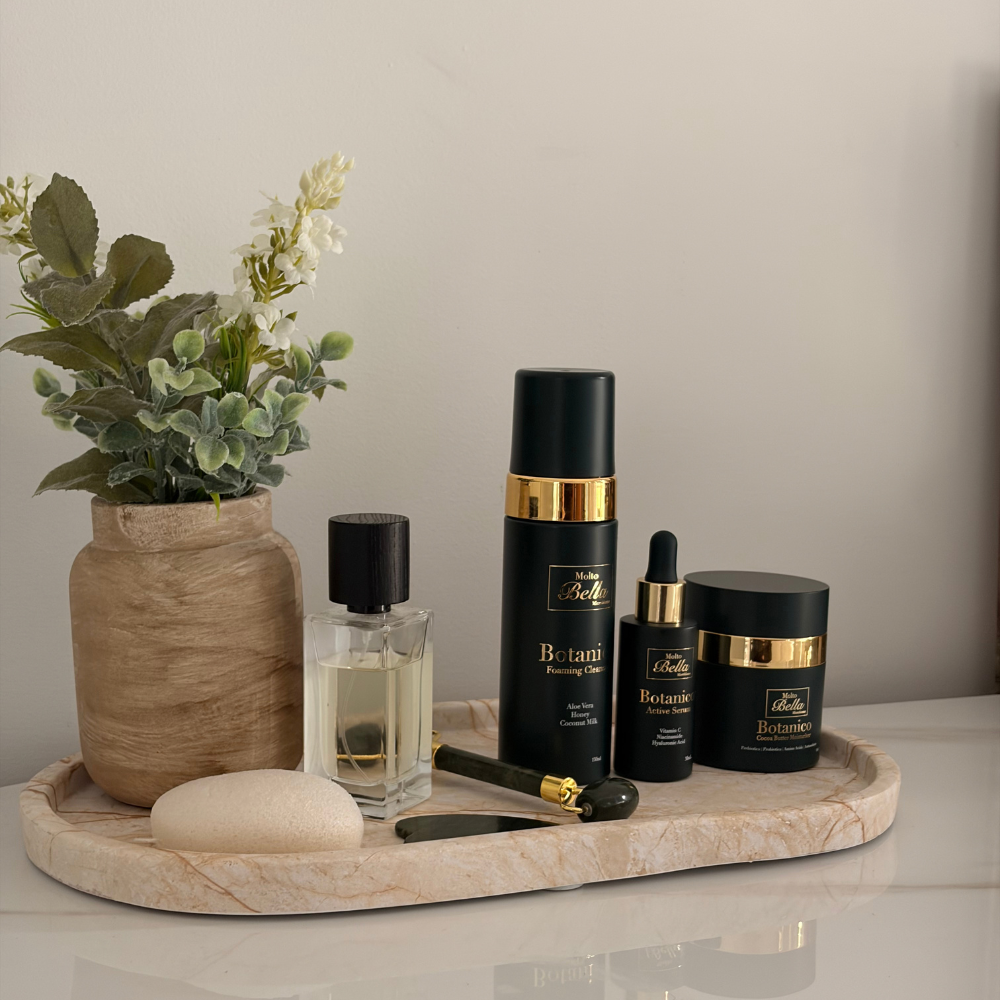
Molto Bella helps bridge the gap between technical microbiology and everyday skin decisions, making microbiome care feel less intimidating and more practical.