Do Skincare Ingredients Cancel Each Other Out?
It is easy to feel like skincare comes with a rulebook.
Don’t mix this with that. Use one active in the morning and another at night. Never layer certain ingredients. Add a new serum because everyone online is talking about it.
But do skincare ingredients really cancel each other out?
Usually, no.
Most skincare ingredients do not simply neutralise each other when they meet on your skin. What matters more is whether the ingredients are stable in their formulas, how often you are using them, and whether your overall routine is asking too much of your skin at once.
What actually matters
A well-formulated product is designed so its ingredients can work together effectively. This is why it is often easier to use a formula created to combine active ingredients than to layer several new products at home.
The bigger issue is usually not that your ingredients are “cancelling each other out.” It is that your routine may be becoming too strong, too complicated or too fast for your skin.
Using an exfoliating cleanser, acid toner, treatment serum and retinoid in the same routine, for example, can leave skin feeling tight, dry, flaky or uncomfortable. That does not mean each ingredient is bad — it may simply mean the combination, frequency or amount is not right for you.
Ingredient pairings that generally work well
Vitamin C + niacinamide
This pairing has been misunderstood for years, but modern formulas can combine vitamin C and niacinamide beautifully. Vitamin C helps support radiance and a more even-looking complexion, while niacinamide supports balance, hydration and the skin barrier.
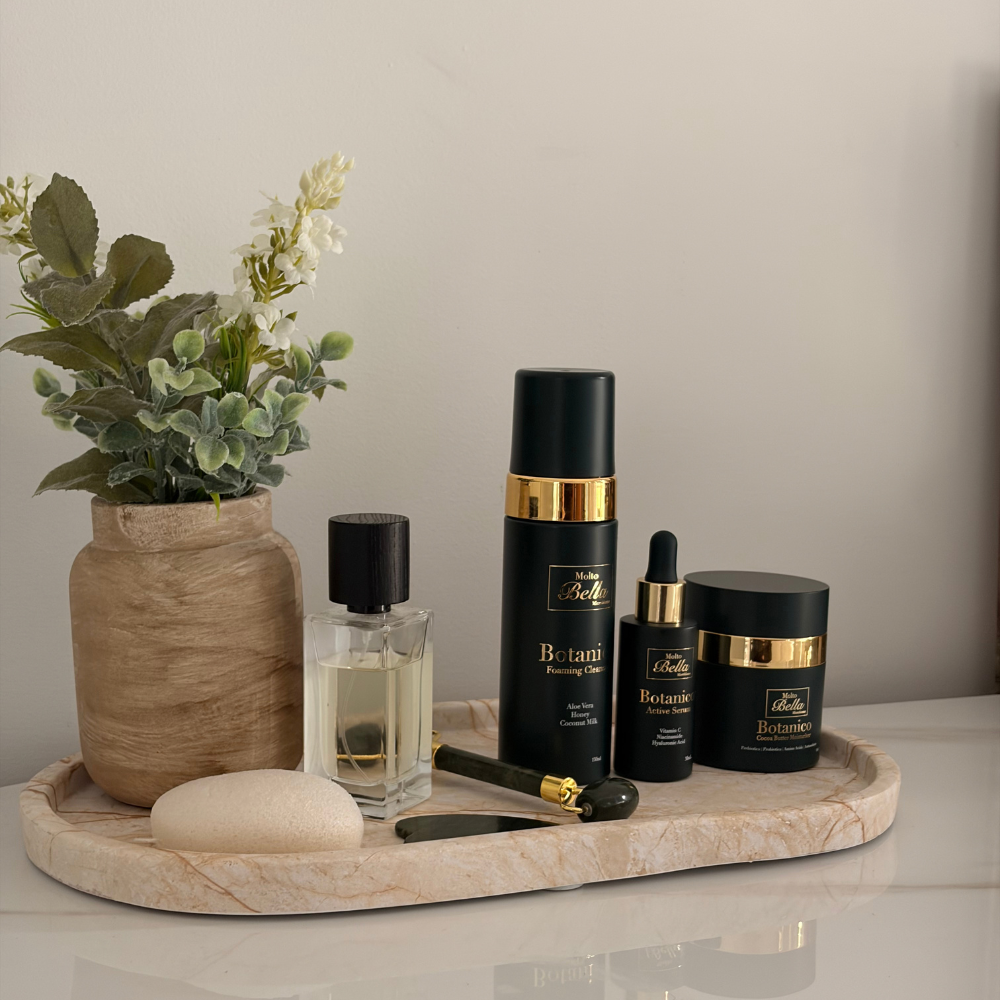
The Botanico Active Serum brings vitamin C and niacinamide together with hyaluronic acid in one considered formula, helping take the guesswork out of a multi-active step.
Hyaluronic acid + most routines
Hyaluronic acid is a hydration-focused ingredient that generally layers easily with many other skincare products. It is not an exfoliating acid; it is a humectant that helps draw and hold water in the skin.
It can be a helpful supporting step alongside more targeted ingredients, particularly when your skin needs extra hydration and comfort.
Niacinamide + a simple routine
Niacinamide works well in many routines because it is often used to support the skin barrier, hydration and a more balanced-looking complexion. It can be a good ingredient to pair with a routine that focuses on consistency rather than constantly changing products.
Pairings to introduce thoughtfully
There are very few skincare combinations that are a universal “never.” But some pairings can be more irritating when used together, especially if you are new to active skincare or are already using multiple treatment products.
Retinoids + exfoliating acids
Retinoids and exfoliating acids such as AHAs and BHAs can both be effective ingredients. However, using them together in the same routine may be too intense for some people and can increase the chance of dryness, stinging, redness or peeling.
Instead of trying to use everything at once, consider alternating them on different nights and keep the rest of your routine gentle.
Benzoyl peroxide + certain retinoids
Benzoyl peroxide can be drying, particularly when used alongside a retinoid. It may also affect the stability of some retinoid formulas, so it is worth checking each product’s directions or asking a dermatologist or pharmacist how best to use them.
Too many exfoliating steps
Sometimes the problem is not a specific ingredient combination at all. It is the accumulation of exfoliating products across your routine.
An exfoliating cleanser, exfoliating toner, resurfacing serum and treatment mask may each seem fine on their own. Used together, they can become more than your skin needs.
How to introduce skincare actives
When you are adding a new active ingredient, keep the rest of your routine simple.
- Introduce one new product at a time.
- Begin slowly rather than using a new active every day from the start.
- Use gentle cleansing, hydration and moisturiser to support your routine.
- Give your skin time to adjust before adding another active.
- If your skin feels persistently tight, stingy, flaky or irritated, pause and simplify.
Retinoids are a good example of why slower is often better. They can cause dryness, peeling and irritation when first introduced, so dermatology guidance commonly recommends starting gradually, moisturising and using sun protection during the day.
The takeaway
Skincare does not need to be complicated to be effective.
Most ingredients do not cancel each other out. The more important question is whether your routine is balanced, considered and comfortable for your skin to use consistently.
You do not need every trending active at once. Start with the basics, introduce new products thoughtfully and remember that a routine your skin feels good with is often more valuable than one packed with steps.