Is Your Routine Accidentally Damaging Your Microbiome?
Most of us build our skincare routines with the best intentions — cleansing, toning, treating, moisturising. But some of the most popular routine steps can quietly chip away at your microbiome without you ever realising it, especially when they’re done too often, too harshly, or with the wrong formulas.
Think of your skin microbiome as a living ecosystem made up of bacteria, fungi and other microorganisms that help keep your barrier strong, your pH balanced and your skin calmer and clearer. When that ecosystem is in balance, your barrier is more resilient, irritation is less likely and breakouts are often easier to manage. When it’s disrupted, you may notice more sensitivity, tightness, redness or flare‑ups — even if you’re “doing everything right” with your routine.
Here’s what to watch out for (and how to reset).
The Over‑Cleansing Trap
Cleansing is essential — but over‑cleansing, or using a cleanser that’s too harsh, strips the skin of its natural oils and disrupts the delicate balance of microorganisms on the surface. If your skin feels “squeaky clean” after washing, that tight, dry feeling is a red flag that you’ve gone too far, not a goal to aim for.
Dermatologists now recommend gentle, pH‑balanced cleansers that remove sweat, SPF and makeup without completely defatting the skin or disturbing the microbiome. For most people, cleansing once in the morning and once at night — with a double cleanse in the evening if you wear heavy SPF or makeup — is plenty; more frequent washing can literally wash away beneficial microbes along with the bad.
A microbiome‑friendly cleanse should leave your skin feeling comfortable, soft and lightly hydrated, not tight, itchy or shiny‑dry. If you often have to “fix” your skin with layers of moisturiser after cleansing, it may be a sign your cleanser is too strong for your barrier and microbiome.
The Exfoliation Paradox
Regular exfoliation can improve texture and radiance by helping to lift away dead skin cells and smooth the surface. But when chemical exfoliants — particularly high‑concentration AHAs and BHAs — are overused, they can thin the barrier, raise skin pH and disturb the “habitat” that your good bacteria rely on.
Frequent or high‑strength exfoliation can strip essential lipids and proteins from the outermost layers of skin, making it easier for pathogenic bacteria to outcompete beneficial microbes. The result can be a confusing mix of issues: increased sensitivity, redness, stinging, more frequent breakouts or flaking that never quite settles.
Most derm‑led guidance now suggests keeping strong acids to a few times a week at most, and choosing gentle, well‑buffered formulas that respect barrier health. If your skin feels raw, burning or overly tender after exfoliating, or if you’re layering multiple exfoliating toners, serums and masks, that’s your cue to pull back and let your barrier — and microbiome — recover.
Preservative overload
Preservatives are non‑negotiable in most skincare; they stop products from becoming contaminated with harmful microbes once a jar or bottle is opened. But some traditional preservatives, such as certain parabens and formaldehyde‑releasing agents, have broad antimicrobial activity that can extend beyond the product and potentially influence the skin’s own microbial community with frequent, long‑term use.
Emerging research suggests that repeated exposure to some of these preservatives can contribute to barrier disruption, allergies and changes in skin flora, especially in people with already sensitive or compromised skin. This doesn’t mean every preserved product is “bad,” but it does highlight the value of modern, carefully selected preservative systems and formulas that are tested to be microbiome‑respectful.
Microbiome‑friendly formulations aim to use the mildest effective preservation strategies, avoid unnecessary antimicrobial “extras” and focus on ingredients that support barrier lipids and hydration — creating a hospitable environment for beneficial microbes rather than constantly challenging them.
Fragrance, Essential Oils And Sensitivity
Fragrance is one of the most common triggers for cosmetic irritation and sensitisation, even when it’s labelled as “natural” or derived from essential oils. For a microbiome that’s already under stress from over‑cleansing or over‑exfoliating, added fragrance and strong essential oils can become the tipping point that pushes skin into chronic redness, stinging or flare‑ups.
While some people tolerate fragrance well, sensitive or reactive skin often does better with fragrance‑free or minimally fragranced formulas, particularly in leave‑on products that sit on the skin for hours. By leaving out unnecessary fragrance, microbiome‑focused brands reduce one more potential irritant, helping the barrier stay calmer so beneficial microbes can do their job.
If you love a sensorial routine, you can still weave in small moments of ritual — like using a soft cloth, breathing deeply as you cleanse or enjoying texture — without relying on heavy perfume in every step.
Everyday Habits That Stress The Microbiome
It’s not just what you apply; how you use your products and live day‑to‑day also shapes your skin ecosystem.
Common microbiome stressors include:
- Very hot showers or long baths, which dissolve skin lipids and wash away protective microbes more quickly.
- Aggressive scrubbing with rough cloths or brushes that physically strip away the outer layers of skin and their resident bacteria.
- High‑alcohol toners, frequent spot‑treating with strong antibacterials, or “nuking” the whole face with harsh acne treatments.
- Environmental stressors like pollution and UV, which can damage barrier lipids and indirectly impact microbial diversity if the barrier isn’t well supported.
Balancing these factors with gentler cleansing, consistent moisturising, daily sunscreen and lifestyle habits like sleep, stress management and a nutrient‑dense diet can help keep your microbial ecosystem more resilient over time.
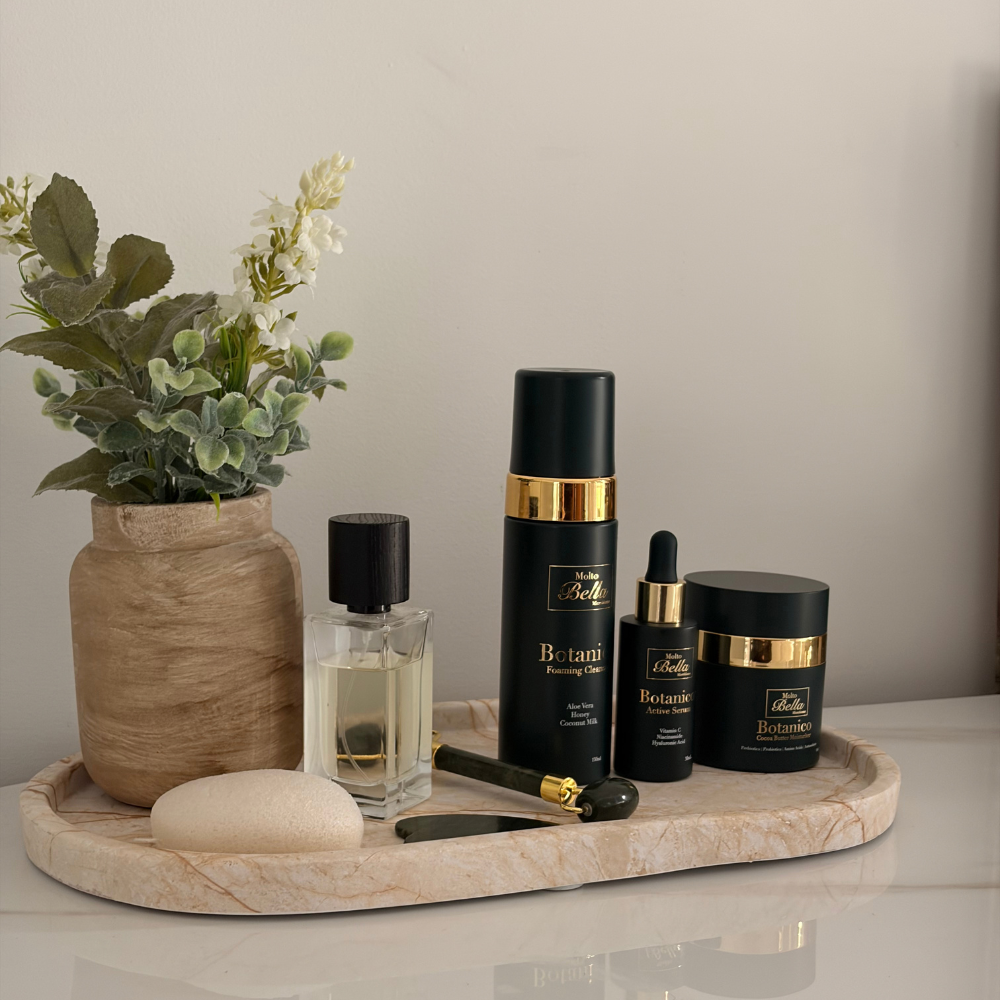
The Molto Bella Alternative
The goal of a microbiome‑friendly routine isn’t just to avoid irritation; it’s to actively create the conditions where your skin’s own ecosystem can thrive. That means formulas that cleanse without stripping, treatments that respect your barrier and moisturisers that replenish lipids and hydration while keeping pH in a skin‑friendly range.
Molto Bella products are designed to work with your skin — and its microbes — at every step by:
- Using gentle, pH‑balanced surfactants and textures that lift away impurities without leaving your skin feeling tight or “squeaky.”
- Favouring barrier‑supportive ingredients like humectants and lipids that help maintain a healthy “home” for beneficial bacteria.
- Avoiding unnecessary fragrance and harsh antimicrobial extras so your microbiome can stay as diverse and stable as possible.